Meta Andromeda 2026 ("Andromeda 2.0"): what the update means for your ads
Meta has rebuilt Andromeda. What changed in how ads are selected, what didn't, and what now matters for creatives and conversion signals.
 Daniel Kalcher5 min read
On October 28, 2026, Meta introduced the next generation of Andromeda on its engineering blog. Andromeda is the system that picks the matching candidates every time an ad is delivered. Many blogs have since called the update "Andromeda 2.0". Meta doesn't use that name, but it's the same thing.
The post is technical: GPUs, kernels, compute. For advertisers, three questions remain. What changed? Do I have to do anything? And what changes for my campaigns?
What Andromeda does
Meta delivers ads in stages. Andromeda is the first: when someone opens Facebook or Instagram, it picks a small set from all the ads that are eligible for that person, within milliseconds. Only this set gets scored in detail by the heavier ranking models, and then the auction decides.
Meta first described Andromeda in December 2024. Back then it narrowed tens of millions of ads down to a few thousand candidates. An ad that isn't picked at this stage never makes it to the auction, however good it is.
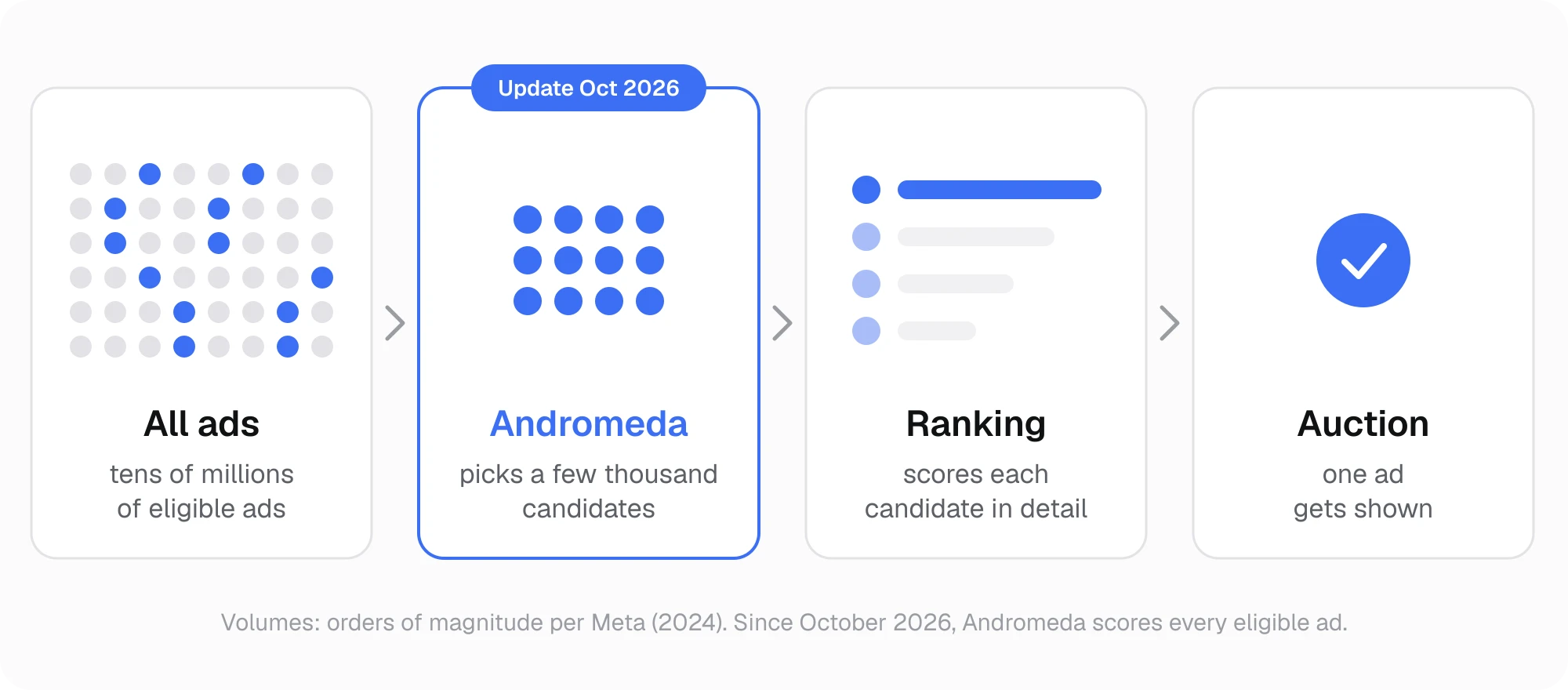
What changed in October 2026
According to Meta's post, the new generation mostly adds capacity within the same response time:
- Every ad gets scored: The system scores every eligible ad across Facebook and Instagram, with a quality close to that of the ranking models.
- More speed: It surfaces the top candidates at over one billion ads per second, which Meta puts at 100 times the 2024 system.
- Less compute: The model needs about 300 times fewer operations per score than the 2024 model.
- Finer picture of each person: Instead of a single model for the user side, several specialized models work together. Among other things they use sequences of ad interactions, user cohorts, content features derived from language models, and engagement across Meta's apps.
Meta gives the reason itself: with Advantage+ and generative AI tools, advertisers have created hundreds of millions of new ads in a short time. The system has to keep up with that volume.
Meta reports one result: since 2025, Andromeda has increased conversions on Facebook by 2.4%. The post doesn't say how that was measured or what the baseline is. Other numbers circulating in "Andromeda 2.0" articles, such as 22% higher ROAS, come from the 2024 post and refer to Advantage+ creative, not to this update.
What you have to do: no settings
There is no switch for Andromeda. The system runs for every ad, and Meta describes the improvements as automatic. Optimization goal, bid strategy, budget and auction also work as before.
Two things you control are still worth a look. The following points are our interpretation, not guidance from Meta.
Creatives: different, not more
If the system holds every ad against a detailed picture of each person, the content of the ad becomes the targeting. An ad for accountants that talks about time pressure at year end reaches different people than one that talks about cost. That holds even with a broad audience.
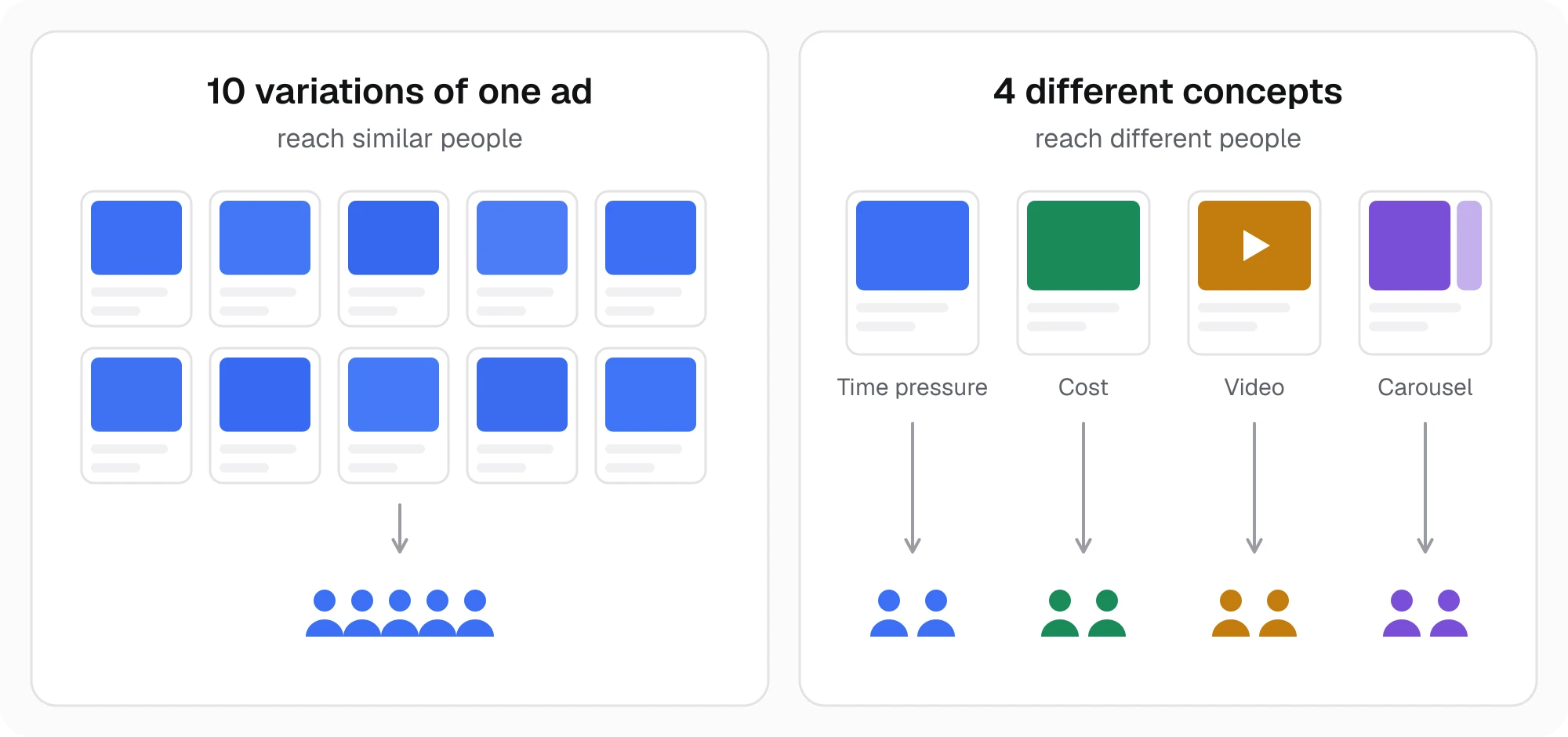
That means:
- Test different messages: Different problems, benefits and audiences in the copy, not just other colors or headlines.
- Mix formats: Image, video and carousel appeal to different people and land in different placements.
- Don't overrate variations: Ten near-identical versions of one image, made by hand or with AI, give the system hardly any new options.
The signal decides what to look for
Andromeda finds candidates. What Meta's system as a whole optimizes for is set by your optimization goal and by the conversions you send back. If Meta only gets the submitted form, the system looks for people who submit forms. Whether they become customers, it never learns.
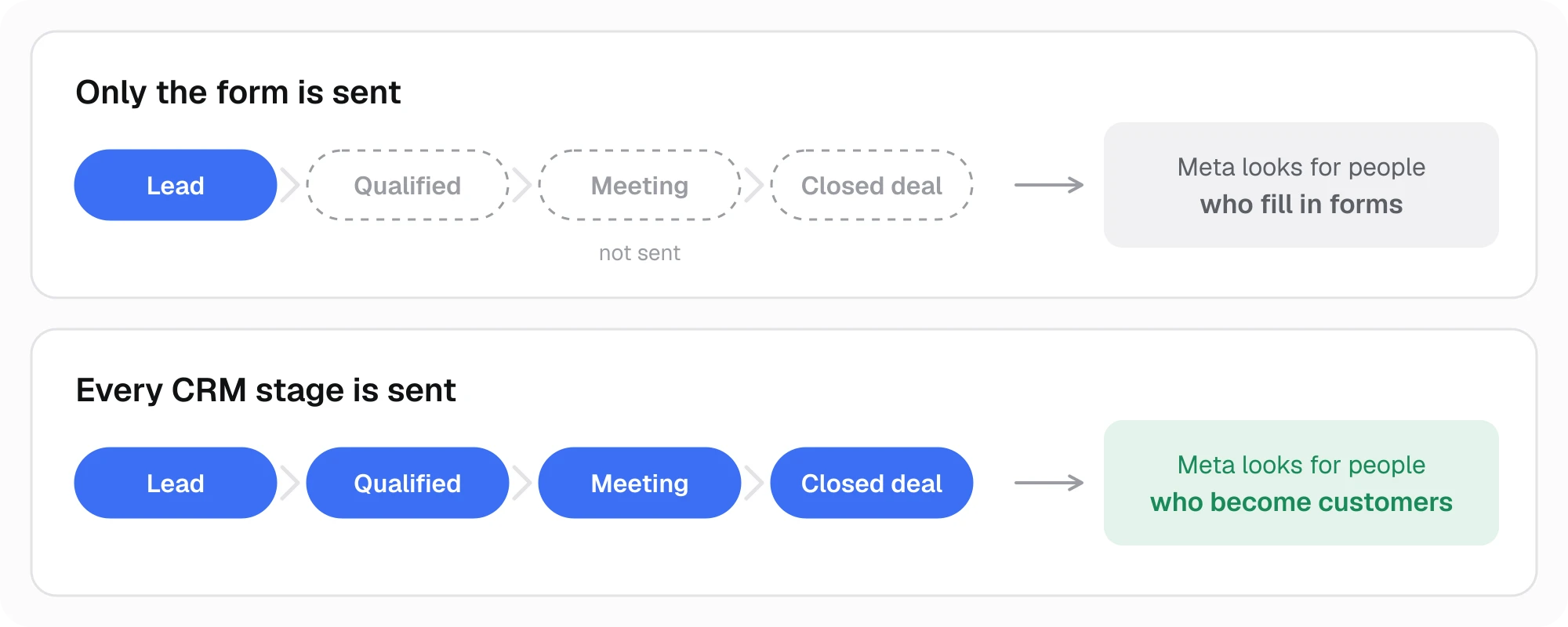
A better selection system doesn't make this problem smaller: it finds the people who match your signal, only faster and more precisely. That is why it pays to send sales stages such as qualified leads, meetings or closed deals from your CRM to Meta, for example through the conversion leads integration. Which stage makes a good goal is covered in Which CRM stages to send back to Meta and Google.
And: Andromeda doesn't measure anything. Conversions lost in the browser to consent banners, browser protection or ad blockers are still missing for Meta after the update. The Conversions API sends them from the server, together with hashed contact details, so Meta can match them to the right person.
Show Meta and Google who actually buys.
Leads, meetings and deals go server-side to seven ad platforms, deduplicated with the pixel. So their algorithms optimize for real customers.
How TSO helps
TSO sends conversions to Meta through the Conversions API, including CRM stages for lead optimization. Deals, meetings and payments come in by webhook, API, CSV or Stripe and are matched to the right lead by email, phone or an external ID. Pixel and server send the same event ID, so Meta counts each event once, and lead IDs from Instant Forms go along with every later stage.
For your creatives, TSO shows the campaigns, ad sets and ads from your Meta ad account with spend and a preview image, next to the leads and closed deals that came through clicks on those ads. So you see which message brings customers, not just cheap leads.
How TSO helps
Frequently asked questions
Do I have to turn on Andromeda in Ads Manager?
No. Andromeda is part of Meta's delivery system and runs for every ad. There is no setting for it, and Meta describes the improvements as automatic.
Is the update officially called "Andromeda 2.0"?
No. Meta calls it the next generation of Meta Andromeda. "Andromeda 2.0" is a name blogs and agencies gave the update.
Do I need a lot more creatives now?
Not necessarily more, but more different ones. Ten slight variations of the same image give the system hardly any new options. A few ads with different messages, formats and angles do.
Does Andromeda help with conversions lost to consent or browser protection?
No. Andromeda selects ads, it doesn't measure conversions. What gets lost in the browser is still missing for Meta. The Conversions API helps here, because it sends conversions from the server.
Terms in this article
In depth in the guide
Daniel is CTO and leads the technology behind tracking, attribution and conversion APIs at TSO.